

by Catherine Felidae
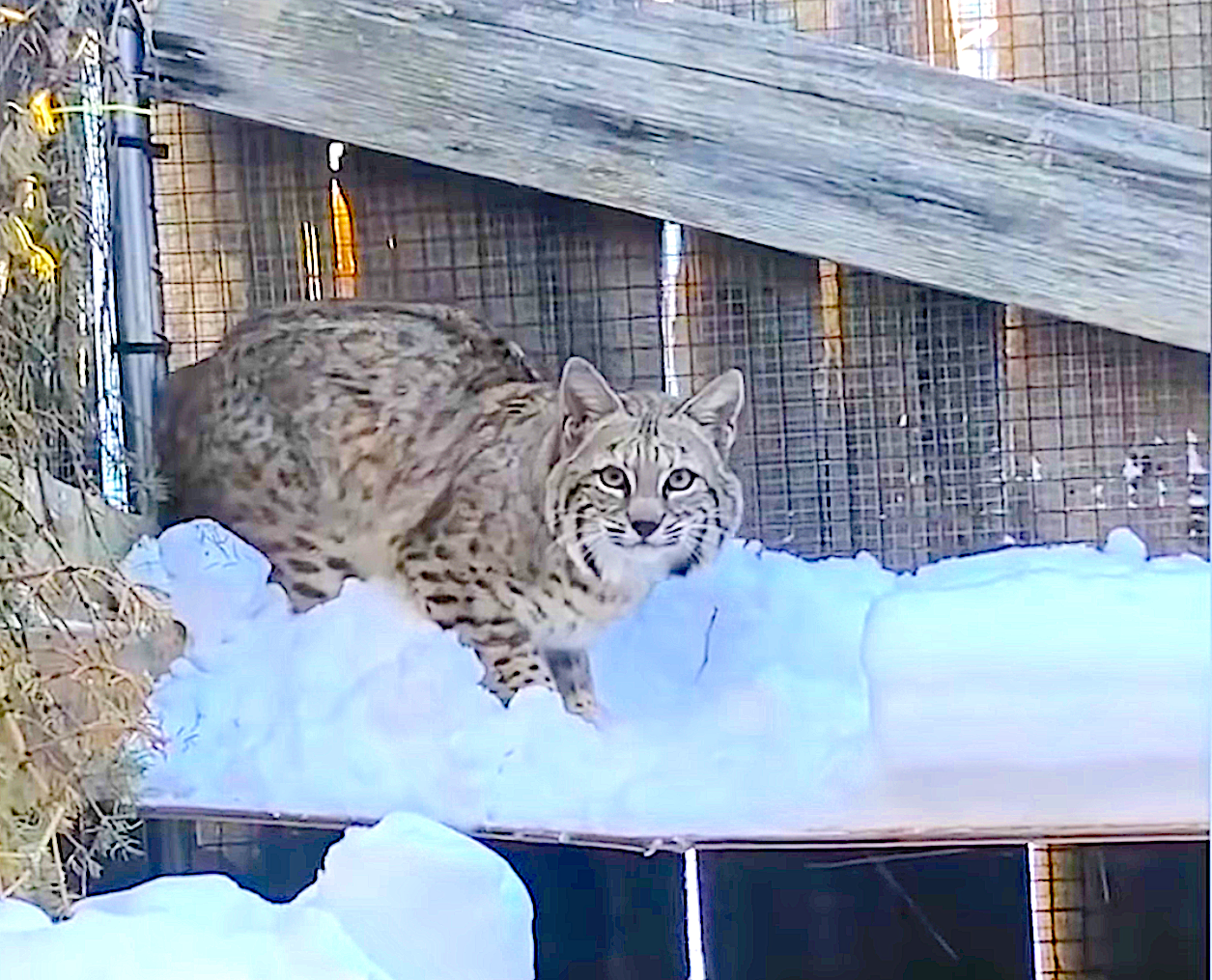
In the winter, going to work early or driving kids to school in the dark, sometimes we see a bobcat hunting for mice around the compost bin of one of the houses, or crossing the road before there is much traffic.
Bobcats are one of the two types of lynxes that we have:
- The Canada lynx has big, furry feet and can walk on deep snow.
- The bobcat is the smaller one with the stubby tail.
Bobcats live in habitats where the snow does not get as deep. With the milder winters we have had, you are more likely to catch a glimpse of one.
The green space and quiet in and around Calgary’s Fish Creek and Glenmore Reservoir usually has many prairie hares and the evergreens and is home to three types of squirrels, all of which are natural prey for bobcats. With the recent warm weather and increase in the number of mice, the hunting has been good.
The food source and habitat are here. That is why we’re seeing more of them lately.
Bobcats are about twice the size of a house cat. With the conditions we have in Calgary, don’t be surprised if you see one in your backyard or garden.
A bobcat can jump up onto a fence to catch a squirrel, or it can chase down a rabbit.
If a small dog wants to challenge one, expect it to lose.
Like other cats, bobcats are ambush predators. They crouch down low and watch and wait for a prey animal to come close enough. Then they do a short run and chase.
As shy as they are of humans, bobcats have been known, when hungry, to take a house cat, and even a small dog. So, if you see one lounging and stretching out in your backyard, it’s not a good idea to introduce it to your pet. As with coyotes, don’t leave food for them and influence change in their natural wild behaviour.