
Silent Contemplation by Rima Madi
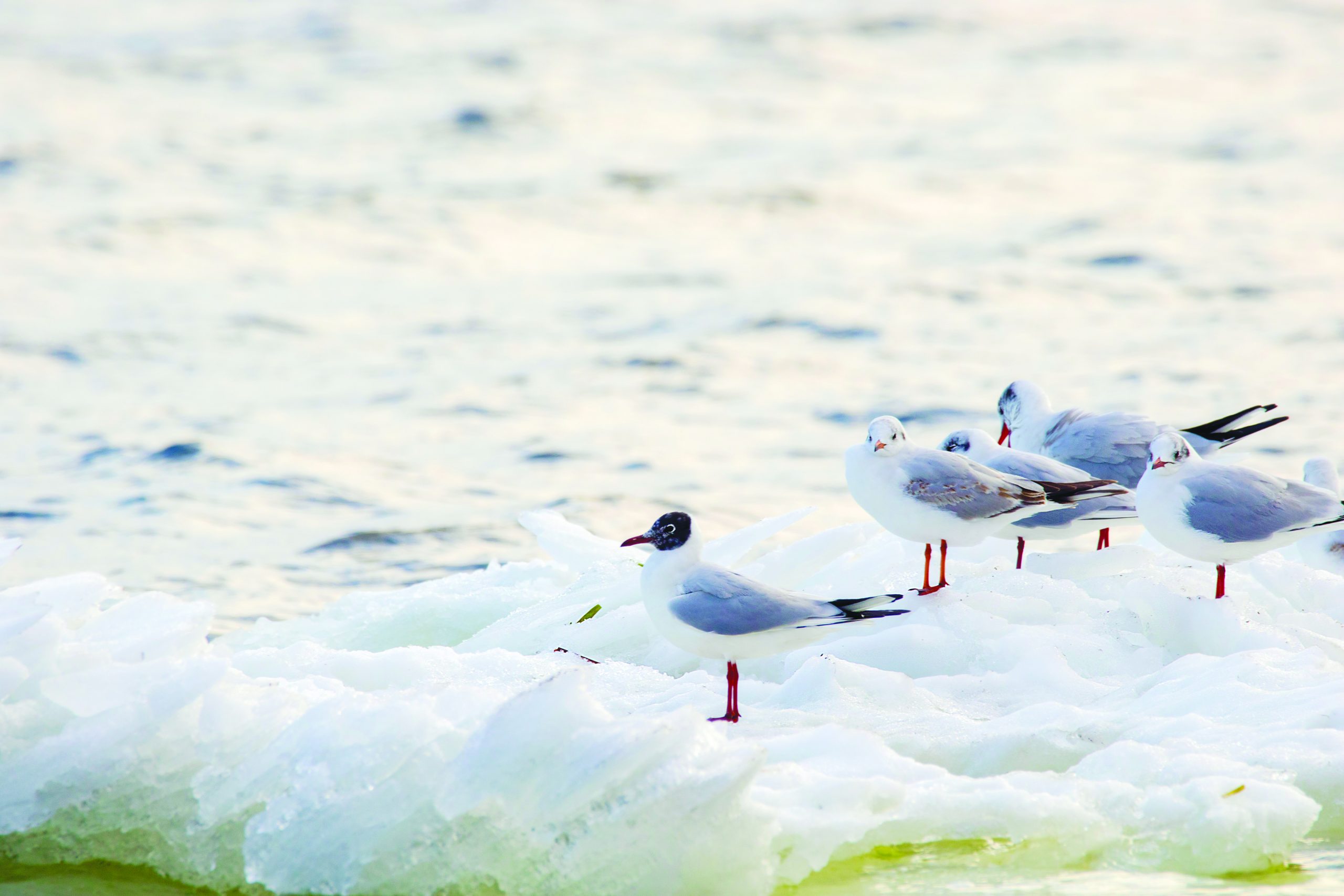
I went outside to visit Mother Nature again, so I headed to the storm pond — a familiar place where I often exercise while doing laps around it. The storm pond greeted me today with a chill and a frozen layer that looked like a silver mirror, reflecting the beautiful seagulls that had inhabited it during the warmer months. I gave thanks, as usual, reflecting on the blessings and the hiccups that, without them, I might not have been outside in the first place.
In today’s spiritual journey with Mother Nature, I looked up and saw a different dimension in the landscape — the sky in all her majesty, creating a shield above my head and protecting everything beneath it. Looking at the sky made me even more appreciative of the vastness of the infinite and the spiritual world that exists beyond our material life. The boundless and infinite dimension of the sky humbled me, reminding me how fragile and vulnerable we humans are compared to the immense field of energy that surrounds us.
This also reminded me of a quote from Michael Hart (2007):
“The goal of Indigenous knowledge is to understand and attempt to contain the energies that infuse everything in order to create a lifestyle that is harmonious with the local ecosystem” (p.84).
While contemplating the sky, I also remembered Hart’s discussion about the opening at the top of the tipi, which symbolizes the connection to the sky and our spiritual reach to the creator (Hart, 2007, p.86).
The change in nature was very real. I felt it through the chill of the wind in our below-five-degree weather, heard it in the silence around the pond and the absence of people, and saw it in a seagull struggling to keep his grip on the thin frozen layer of ice that now covered the surface of the storm pond. The seagull was adapting to the change in his environment — what was once water just months ago had hardened into ice. Today, the seagull taught me to never lose my grip in times of change.
I felt the change with all my senses as I wrapped myself in layers of clothing to keep warm. Change is part of living, and to live is to change. To change, I must stay mindful of my long-term goals — whether they will help me transform my situation while staying true to my worldview, beliefs, and way of being.
I hope you, too, can embrace change in the beautiful way I embraced it today. I said goodbye to the beautiful spirit of the tiny white and silver seagull — grateful for his silent teaching and for showing me how to never lose my grip.
References
Hart, M. (2007). Indigenous knowledge and research: The míkiwáhp as a symbol for reclaiming our knowledge and ways of knowing. First Peoples Child & Family Review, 3(1), 83–90. https://doi.org/10.7202/1069528ar.