


A Different Kind of Open Garden

Photo and article by Monika Smith, Master Gardener
As mentioned in a previous article, I had to remove a large spruce (Picea
pungens var. glauca) in my front yard. What was revealed, once gone,
was a delightfully open space (about 7×7 square meters) full of sunlight. The
light from the southwest resulted in a flourishing of plants that had been
shaded and denied water. Winter pruning of some shrubs added even more
sunlight! The saskatoon berry (Amelanchier alnifolia) literally
jumped out of the ground. Lupins (Lupinus argenteus) that had
disappeared made an incredible recovery.
The tall wild rose (Rosa acicularis) shrubs were also removed.
The privacy that both the roses and the spruce tree provided was gone, so tall
shrubs have been planted in that space to bring privacy back.
I also didn’t want one big bed. The area has a circular shape and pea
gravel pathways seemed right, resulting in a circle and cross design, which has
symbolic connotations throughout the world. It’s organic and curvy with each
quadrant a different size, edged in river rocks of varying sizes.
Plants? I wanted bigger, potted plants to get a head start, adding
robust high bush cranberry (Viburnum trilobum), some potentilla (Dasiphora
fruticosa), bearberry (Arctostaphylos uva-ursi) and coneflowers (Echinacea
purpurea). Perennial prairie flowers were added as plugs, including blanket
flowers (Gaillardia aristata), blazing star (Liatris ligulistylis)
and wild flax (Linum lewisii) with the yellow coneflower (Ratibida
columnifera), sunflowers (Helianthus annuus) and strawberry blite (Blitum
capitatum) in place and blooming. But, it’s like adding a new rug to the
hallway and suddenly, you’re looking at redoing the house. A short but
important walkway and steps were added to make it easier to access the small
hill I had made years ago.
That’s as far as I got this year. I have a thriving ecology, but
digging around, taking out or adding needs to be thoughtfully done. I have
overwintering native butterflies in my yard—removing a natural mulch layer,
moving rocks around, adding or amending soil can disturb living things.
I held an open garden in September, giving people an opportunity to
see my non-botanical garden, weeds and all that provides a sanctuary or refugia
for critters. I was delighted that quite a few people came in spite of the
cold. From experts to people simply liking flowers came questions, good ideas
and advice. Discussion included supporting local native plants, plus native
plants found in the prairies or eastern Canada, including plants that do really
well here, such as globe thistles (Echinops ritro), lilacs (Syringa
vulgaris) and peonies (Paeonia spp.) that support pollination, bird
and critter life. Overall, the untamed look was enjoyed and my very tall plants
allowed people to disappear as they wended their way around to stop to nosh on
a very good crop of golden currents (Ribes aureum). A small yard can be
very private and be a secret garden.
I will have an un-botanical garden tour next year! Better pathways,
more garden, less quack grass. And finally, water features for birds, frogs,
dragonflies, and hopefully, a redwing blackbird family. That joy in the
unexpected and letting nature colour outside our lines will be encouraged.
If you have a garden you would like to share with neighbours? Let’s
see it next year. For more information about native plants, gardening and
biodiversity, contact Monika at [email protected].
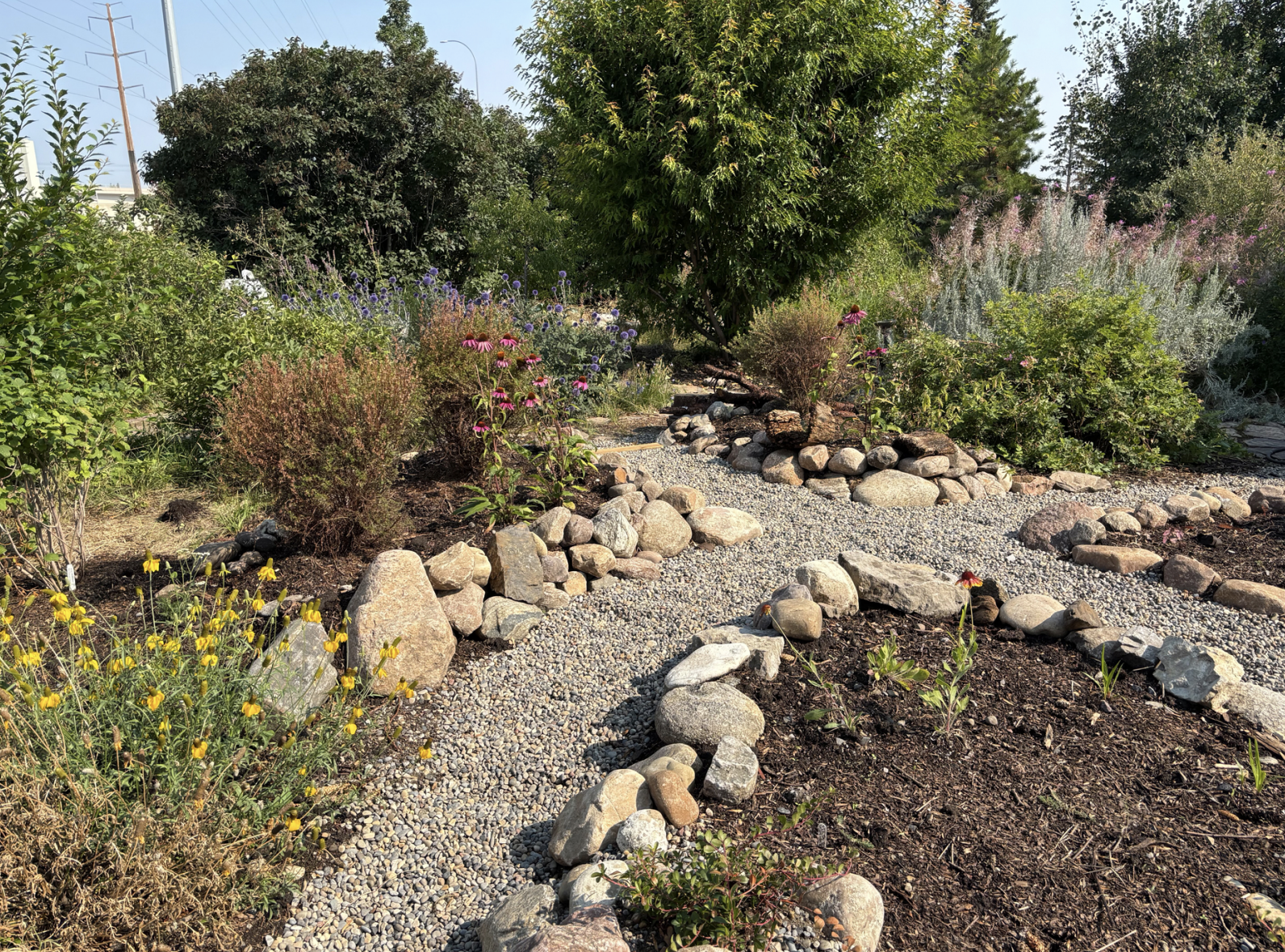
Cutline: New
beds, pathways and plants, where the big spruce once stood
Click here to the Glendale Community News home page for the latest Glendale community updates.