
by Kristina Quapp

The American Mink is a small, amphibious weasel that inhabits wetlands throughout Canada. Weasel refers to slender, small, carnivorous mammals belonging to the family Mustelidae. While the American Mink is most abundant along the coastline of British Columbia, you may have spotted them around Calgary as well!
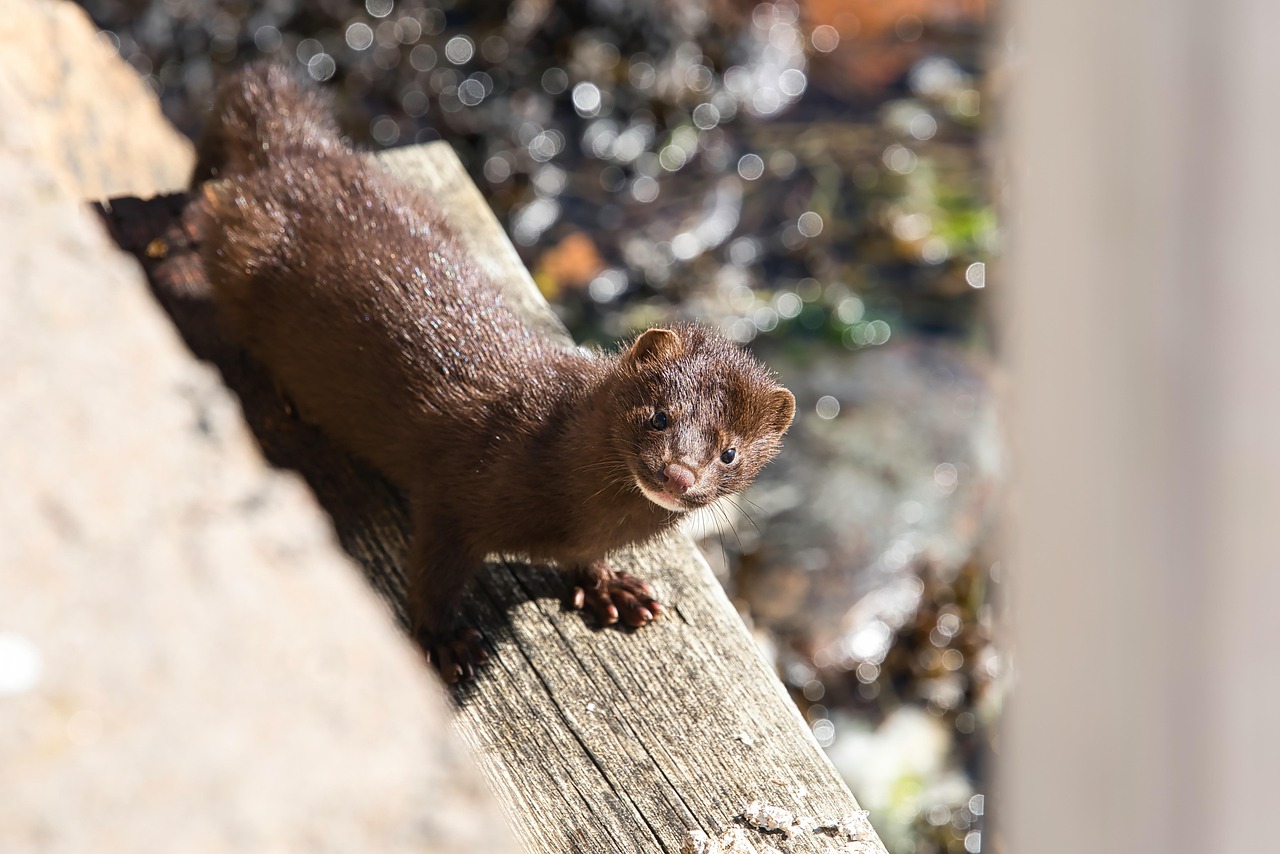
Minks appear in varying shades of brown and black, often with patches of white on their chest and abdomen. Like beavers, minks have two layers of fur; a dense, insulating underfur that keeps them warm, and an outer layer of fur covered in an oily sheen that prevents water from soaking through to their skin. Unlike other varieties of weasel, the American minks’ coat does not turn white in the winter. While their coat grows thicker in the colder months, it remains a dark shade to help them blend into the vegetation along streams, ponds, and riverbanks. Given their habitat, the minks’ paws are partially webbed, allowing them to remain dexterous on land and in the water. Minks’ can range in size from 1 to 1.8 kg in weight, and roughly 60 cm in length.
During the summer months, the mink’s diet shifts to take advantage of warm-weather prey. This often includes crayfish, frogs, fish, and ducks. As the weather cools down, the minks’ diet relies heavily on small land mammals including voles, mice, muskrats, and rabbits. Since the mink often resides in the water, thick brush, or on rocky river edges, it has few natural enemies. On occasion, minks will be preyed upon by coyotes, bobcats, large snakes, and birds of prey.
While predators aren’t considered major threats to the mink, human activity, habitat loss, and environmental contaminants can affect the population. The minks’ unique and luxurious fur remains in high demand in the fur trade. 47 American states and all Canadian provinces currently conduct limited trapping seasons on the mink, with the length of the season varying from place to place. The minks’ habitat also plays a crucial role in their conservation. They rely heavily on streams, wetlands, and shores with dense vegetation to provide safe burrows, and prey to feed upon. The expansion of infrastructure development and pesticide application can impact their reproductive success and long-term health.
Mindful Mink Spotting
To see an American mink for yourself, head to densely vegetated waterways and riverbanks, particularly along the Bow River, the Elbow River, and local wetland ponds. Prime spots include the McKenzie Meadows area, Fish Creek Provincial Park, Lafarge Meadows, Inglewood Bird Sanctuary, Carburn Park, Weaselhead Flats, and Lafarge Meadows. Keep an eye on the water’s edge, rocky shores, and amongst the brush. Keep in mind these key points while looking for our furry amphibious friends:
- Maintain distance: Use binoculars or a phone lens instead of approaching.
- Keep waterways clean: Pack out all trash, including food scraps.
- Stay on marked trails: Avoid trampling riverbank vegetation. Walking off trail can degrade the shoreline and damage hidden dens.
- Never feed wildlife: Feeding minks can disrupt their natural diet and may teach them to associate humans with food.