

by Kristina Quapp
Van Gogh is an artist that needs no introduction, but the style of his work is a different story. Vincent’s style is commonly mislabeled as impressionist, where the more accurate classification would be post-impressionist. Impressionism is a 19th-century art movement that featured a strong focus on lighting, thick brush strokes, unblended colours, and everyday modern subjects painted outdoors (en plein air). As most art movements do, impressionism built upon the foundations of the realist movement which took place about 20 to 30 years prior. Realist painters preferred working en plein air as it allowed them to capture natural light and unvarnished everyday life, while pushing back on traditional academy standards that forced what some considered artificial compositions. While both art styles feature an emphasis on lighting and capturing the environment, impressionists did not focus as heavily on the realistic details.
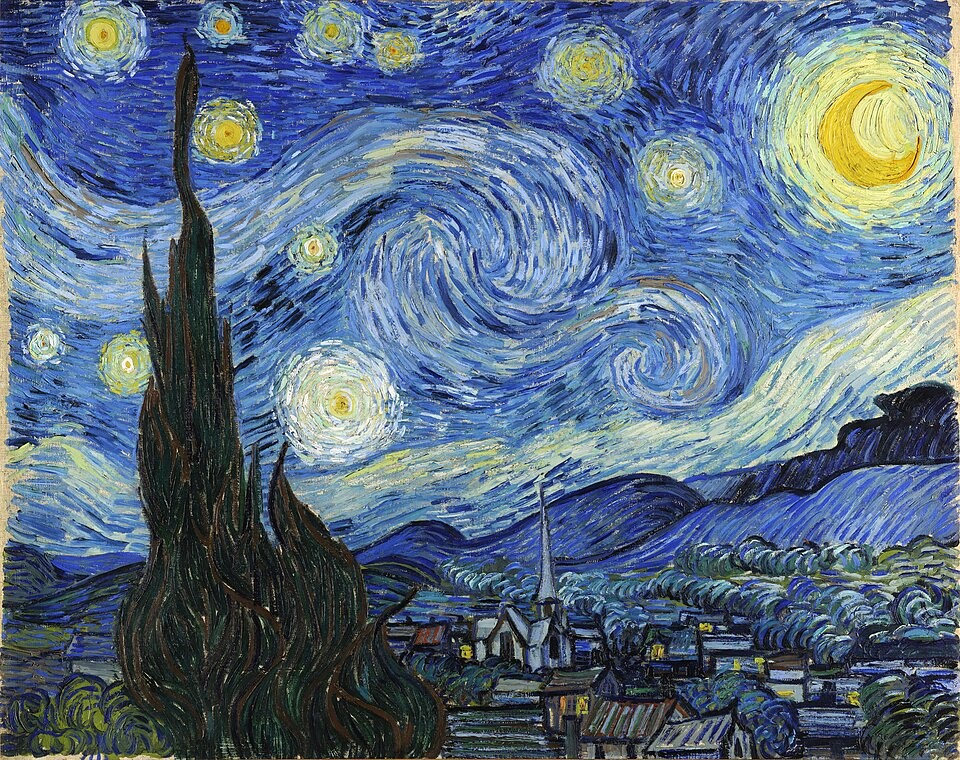
Though Van Gogh’s work certainly captures elements of impressionism such as thick brush strokes and vivid colours, his work often pushed the boundaries of impressionism. For example, Claude Monet, the founder of the impressionist movement, features large brush strokes, but the lighting remains grounded. As can be seen in Monet’s 1875 oil painting, Woman with a Parasol, the piece is heavily stylized. Brush strokes are visible and the hues are vibrant, but the edge light and shadow in front of the woman tells the viewer that Monet focused on realism when capturing the atmosphere. In contrast, Vincent’s The Starry Night—while it maintains impasto as Monet did—exhibits even more vibrant colour contrast and his sentiment at the time, represented in weighty brush strokes. It’s often conferred that The Starry Night is symbolic of Van Gogh’s inner turmoil, given the swirling and turbulent skies, thick impasto brush strokes, and the large looming cypress tree outlined in red.
Claude Monet,Woman with a Parasol – Madame Monet and Her Son, 1875, oil on canvas.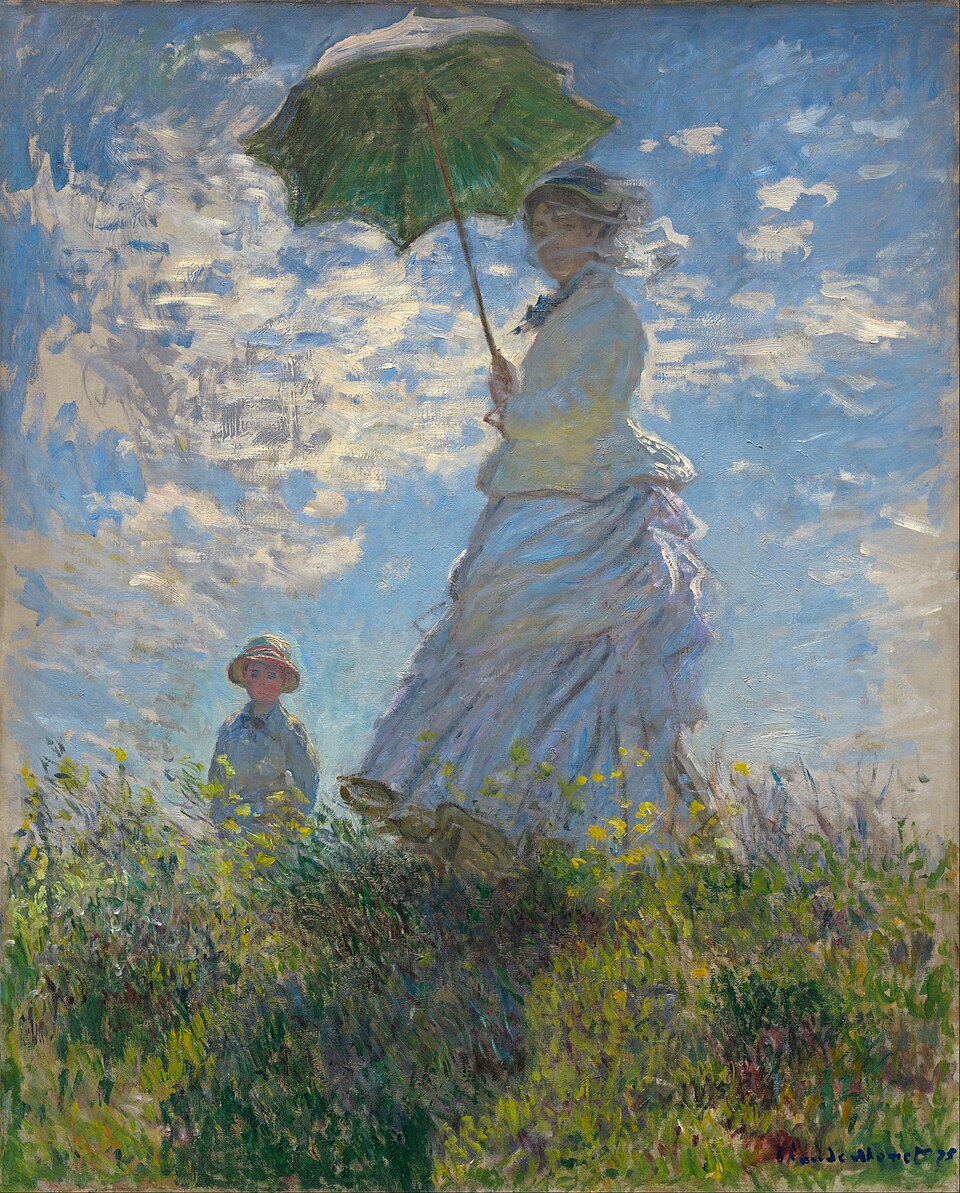
Vincent van Gogh, The Starry Night, 1889, oil on canvas.
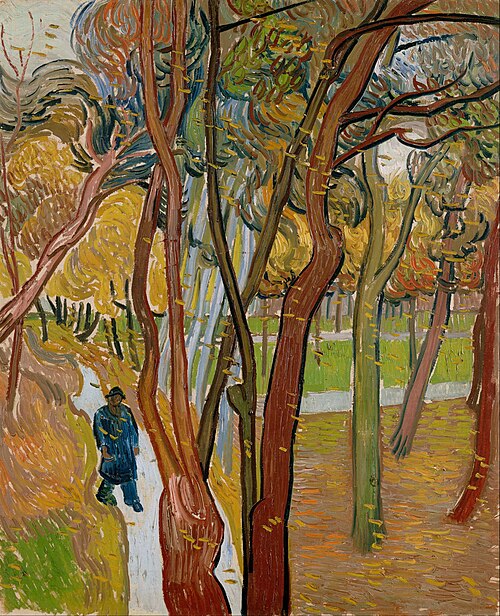
Vincent’s The Garden of Saint Paul’s Hospital, often referred to as Leaf-Fall, features inspired aspects from traditional Japanese woodblock prints. Van Gogh implements an elevated perspective and tree trunks that are abruptly cut off by the lower and upper edges of the canvas, eliminating the horizon line. These artistic choices create a compressed sense of space similar to the arrangements found in Japanese print designs.
Like the changing landscape around him, Van Gogh’s work had moved beyond simply capturing a fleeting impression of the world. His colours became bolder, his brushwork more expressive, and his paintings increasingly shaped by emotion and personal interpretation. This October, as the leaves begin to fall, perhaps take a moment to look at the world around you—not only as it appears, but through the impression it leaves on you.