
by the Calgary Wildlife Rehabilitation Society
As Halloween approaches, many neighbourhoods across Calgary come alive with pumpkins, fake spider webs, glowing lights, and spooky lawn decorations. While these displays help celebrate the season, some common decorations can unintentionally pose serious risks to local wildlife.
Autumn is an active time for many species. Deer, coyotes, squirrels, rabbits, songbirds, and owls are still foraging, while some birds are completing their fall migration before winter arrives. As wildlife continues to move through urban parks, backyards, and neighbourhoods, decorations can become unexpected hazards.
One of the most concerning decorations is synthetic spider webbing. The stretchy fibres can easily entangle birds, small mammals, and even beneficial insects. Birds may become caught while flying through shrubs or trees decorated with webbing, while squirrels and other mammals can become tangled as they move along fences or branches. Entanglement can cause severe injuries, restrict movement, and make animals more vulnerable to dehydration, starvation, or predators.
Loose cords, fishing line, string, ribbon, and lightweight decorative netting can create similar problems. Birds may accidentally use these materials while gathering nesting material or become wrapped in them during flight. Even decorations intended to sway in the wind can become tangled around wings, legs, or necks if they are not securely fastened.
Lighting is another consideration. Many people enjoy illuminating their homes with decorative lights throughout October. While temporary lighting is unlikely to have the same impact as large commercial lighting, excessive outdoor lighting can still disrupt wildlife. Artificial light at night has been shown to alter the behaviour of birds, mammals, and insects by interfering with natural navigation, feeding, and activity patterns. During late September and early October, some migratory birds are still travelling through southern Alberta, and reducing unnecessary overnight lighting can help lessen disorientation.
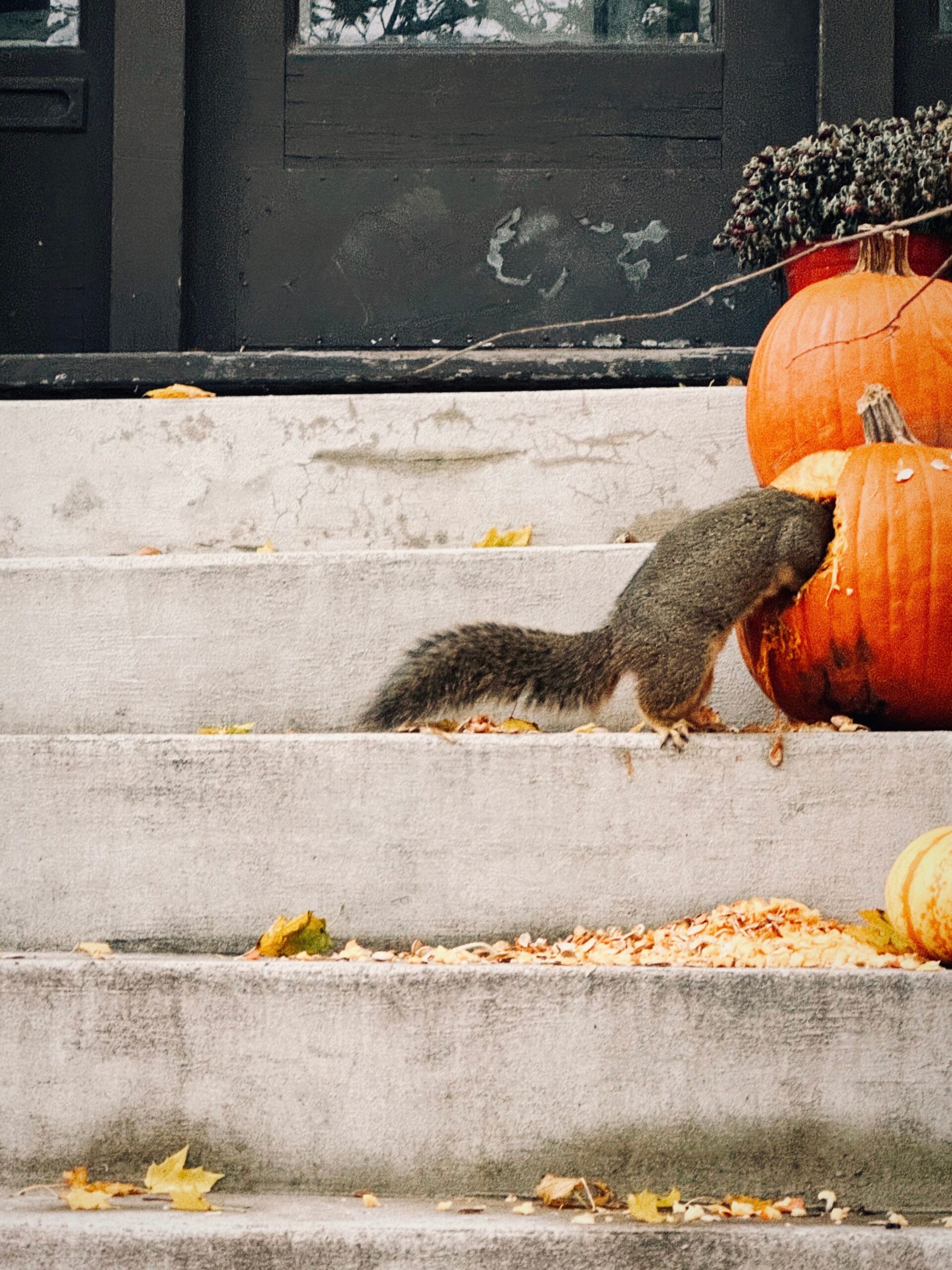
Pumpkins and natural decorations also deserve some thought. While a pumpkin may seem harmless, the smell can attract wildlife looking for an easy meal. Carved pumpkins that contain candles, mold, paint, glitter, or preservatives can make wildlife seriously ill if consumed. If you have pumpkins, bring them inside at night to ensure animals like bears, deer, or coyotes do not consume them. Feeding wildlife, even accidentally, can encourage animals to return to residential areas, increase conflicts with people, and expose them to foods that are not part of their natural diet.
Fortunately, a few simple choices can make Halloween safer for wildlife without taking away from the fun:
- Secure decorations tightly so they cannot blow away or become tangled in vegetation.
- Avoid using artificial spider webbing or decorative netting outdoors.
- Keep electrical cords and extension cables neatly bundled and out of areas where wildlife regularly travels.
- Turn off decorative lights before going to bed.
- If using pumpkins outdoors, keep them inside after going to bed, and remove candles promptly and dispose of pumpkins appropriately once they begin to spoil.
- Dispose of decorations promptly after Halloween to prevent wildlife from encountering them later in the season.
Halloween is a time for creativity and community, and with a little planning, it can also be a season that respects the wildlife sharing neighbourhoods with people. By choosing decorations thoughtfully and cleaning them up promptly, we can help ensure that southern Alberta’s wild neighbours stay safe while everyone enjoys the festivities.